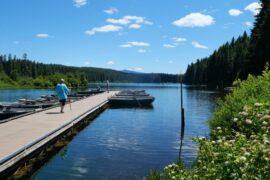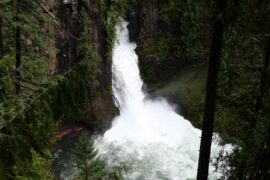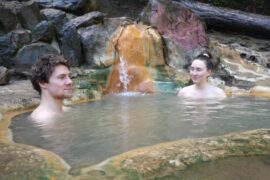
Hart Mountain Hot Springs, also known as Antelope Hot Springs, is a remote and non-commercialized hot spring in Southern Oregon.
Located deep within the Hart Mountain National Antelope Refuge, visitors that make the trek are rewarded with a worthwhile and secluded soak in a scenic setting.
In this article, we’ll cover everything you need to know about visiting Hart Mountain Hot Springs, including how to get there, the best times to visit, and how to camp overnight.
We’ll also include our tips for leveling up your experience, such as what to pack, nearby adventures, and other planning resources.
Hart Mountain Hot Springs Overview
Frequently praised among hot spring adventurers, Hart Mountain Hot Springs offers an enriching and memorable soaking experience in a remote part of Oregon’s high desert.
In fact, we consider Antelope Hot Springs (the other common name) one of the overall better soaking experiences of all hot springs in Oregon, and likely many others would agree.
For many years, two “primitive” pools and one constructed pool (our favorite of the three) have consistently produced lovely hot spring water heated to ideal soaking temperatures.
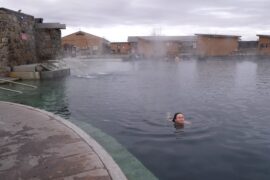
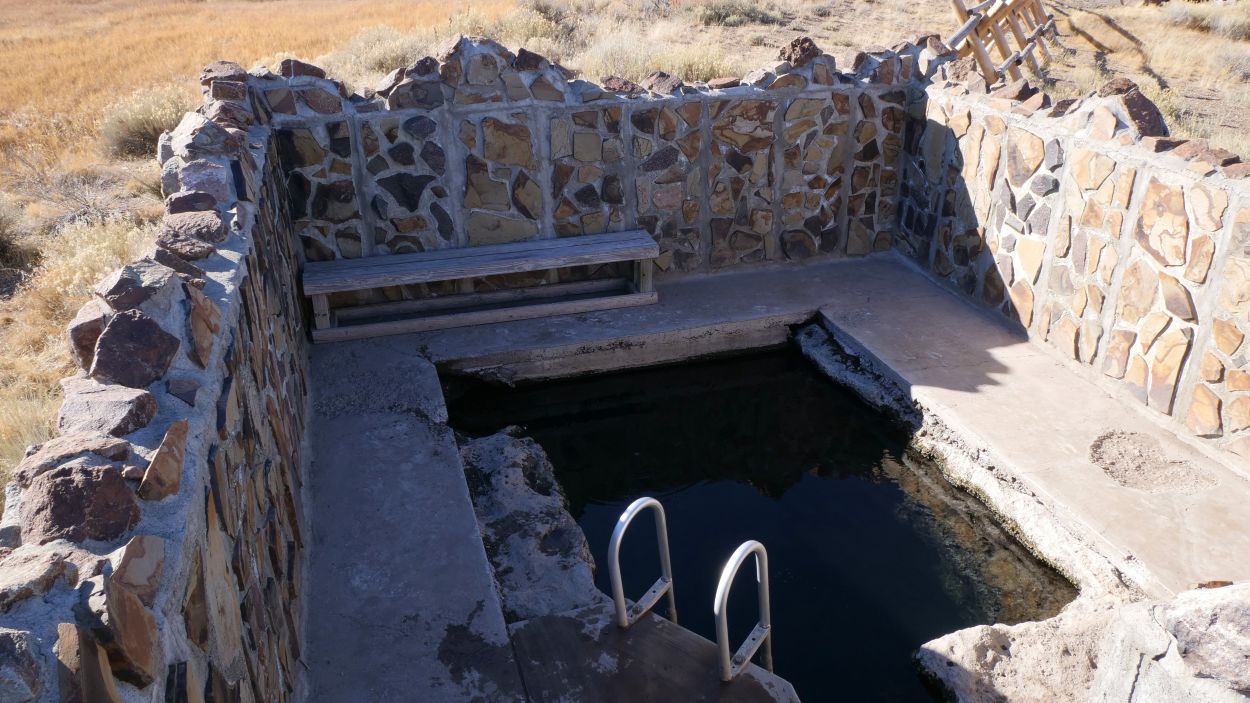
The iconic constructed pool at Hart Mountain Hot Springs is developed with solidly built rock walls and a framework of concrete surrounding the source, which bubbles up persistently from below the soaking pool.
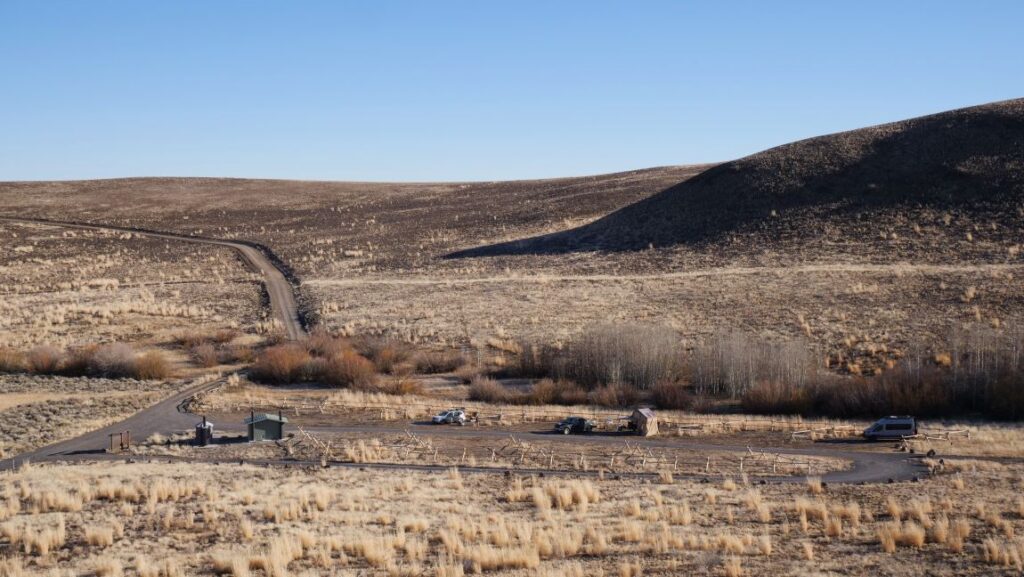
To enjoy a more immersive experience, we highly recommend staying at the Hot Spring Campground, which has campsites that are walking distance from the pools. Also, staying overnight really helps to break up the long drive.
In addition, an overnight visit also allows for stunning stargazing opportunities, which are renowned in this remote region and beautifully framed by the rock wall surrounding the developed pool at night.
Certainly, Hart Mountain Hot Springs is one of the best Hot springs near Bend Oregon. That is, if you consider 4.5 hours “nearby”.
Now that you’re convinced, let’s get prepared to visit this incredible Oregon hot spring. Get ready for long drives, minimal services, and likely no cell signal.
How to Get to Hart Mountain Hot Springs
Hart Mountain Hot Springs is remote and located deep in the south-eastern Oregon high desert, informally termed the “Oregon Outback”.
In fact, the closest “real town” is Lakeview, which is about 2 hours away and has a population of less than 3,000 people.
The table below shows the long drive times to Hart Mountain Hot Springs from various starting points.
| Starting Point | Typical Drive Time | Distance |
| Plush, OR | 1 hr 10 min | 28 miles (45 km) |
| Lakeview, OR | 2 hr | 67 miles (110 km) |
| Klamath Falls, OR | 3 hr 40 min | 160 miles (260 km) |
| Bend, OR | 4 hr 30 min | 230 miles (370 km) |
| Salem, OR | 7 hr | 370 miles (600 km) |
| Portland, OR | 7 hr 30 min | 410 miles (660 km) |
| Reno, NV | 5 hr 30 min | 300 miles (480 km) |
The drive times can add up, which can feel like a bummer but on the Brightside, there are much lower crowds than other Oregon hot springs. Solitude truly is one of our favorite things about eastern Oregon.
However, to earn that seclusion you must be prepared with gas and supplies, which we’ll cover in more detail later.
Coming From Plush
Likely the best way to access the hot springs is via the small town of Plush, located about 12.5 miles south-west of the hot springs as the crow flies.
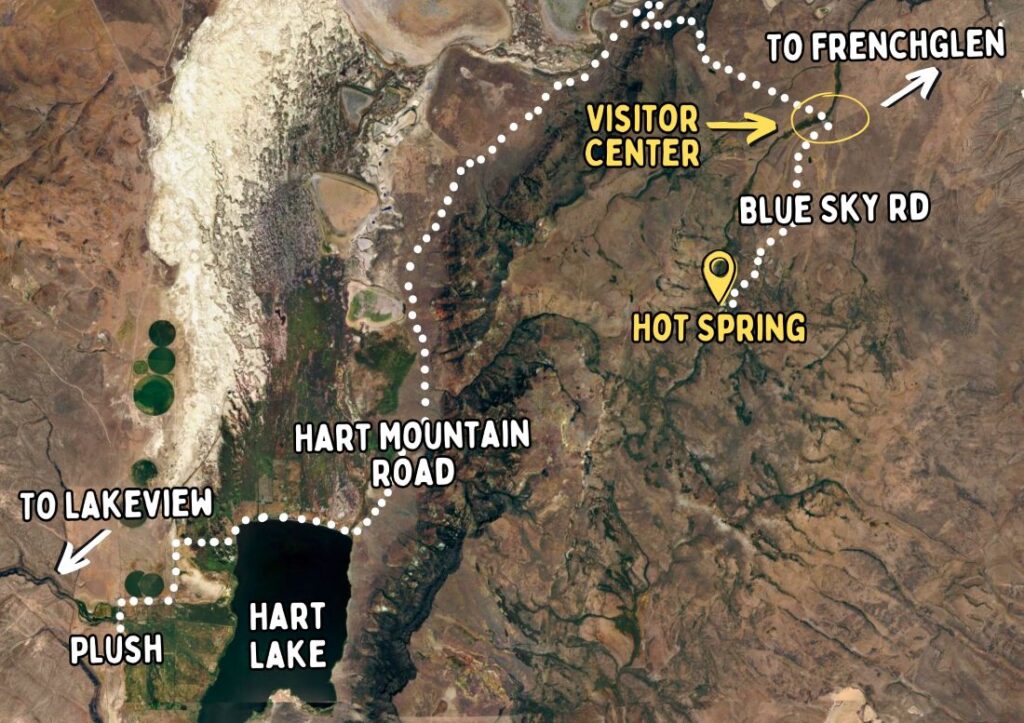
However, from Plush you drive over an hour about 30 miles, half of which is a dirt road (which was in good condition when we last visited).
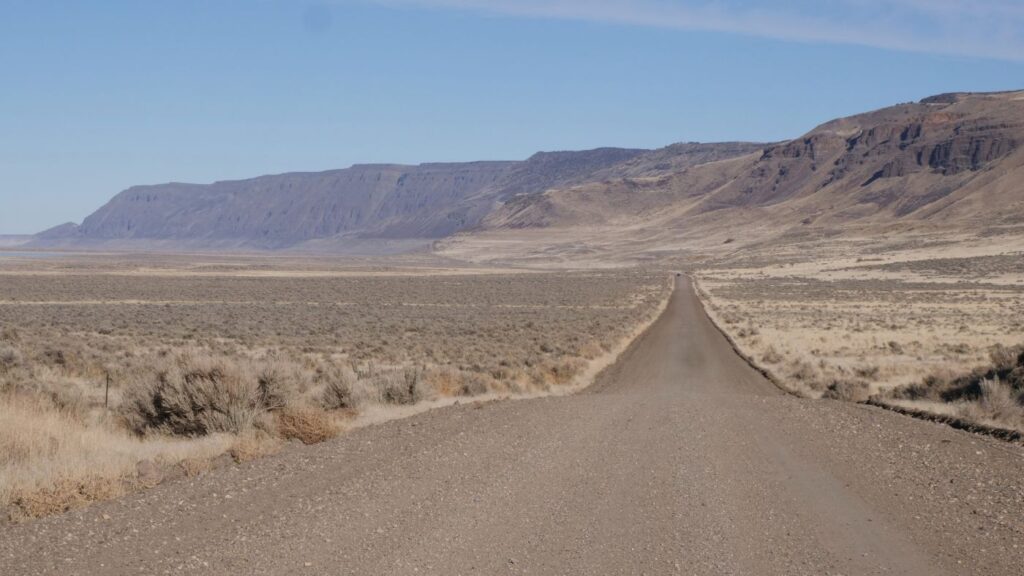
From Plush, briefly head north on Hogback Road 3-10 then turn right onto Hart Mountain Road. After a few zigzags, the road rounds the north side of Hart Lake and orients north.
After paralleling the series of rugged ridges that is the west side of Hart Mountain, the road becomes gravel as it passes Camp Hart Mountain, one of the three campgrounds in the wildlife refuge.
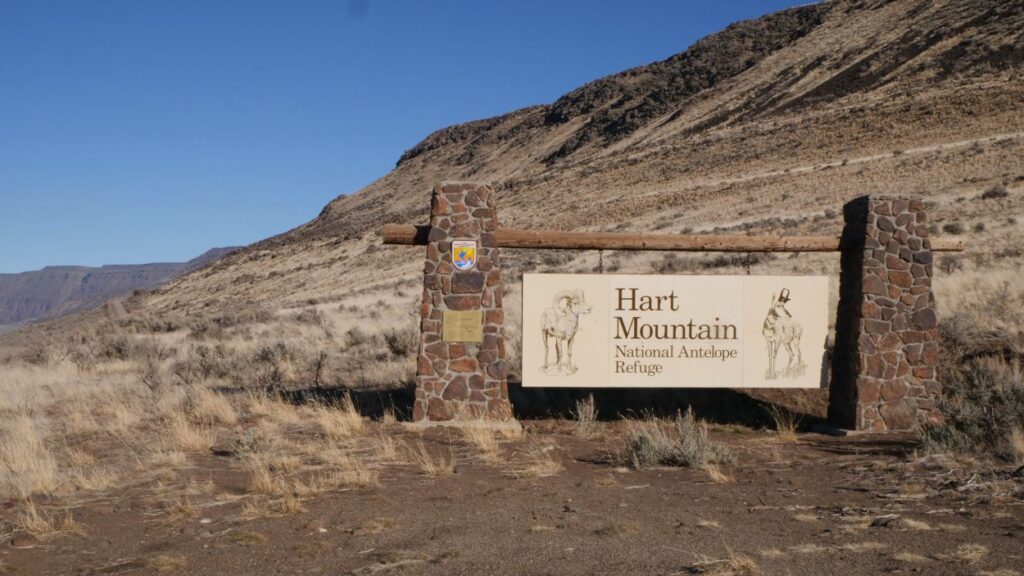
Suddenly, the road turns east into the refuge and climbs in elevation up the ridge. Take advantage of the viewpoint partway up, before finding the plateau and continuing southeast.
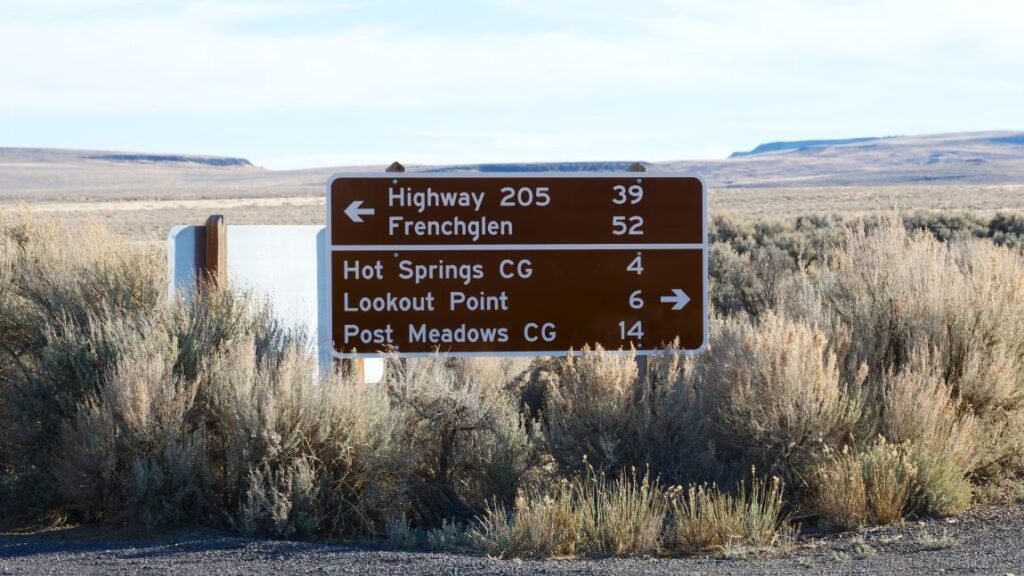
The road passes the Hart Mountain National Antelope Refuge Visitor Center (more on that later) before heading south for the last 4 miles on Blue Sky Road and Hot Springs Campground Road.
Coming From Frenchglen
You can also get to Hart Mountain Hot Springs from Frenchglen to the northeast, but that requires 45 miles on a gravel road. That is 30 miles more of non-paved road than the approach from Plush.
From Highway 205, you can go north to Burns or south to the Nevada border. Also, 205 is at the foothills of the Steens Mountains, which are renowned for their beauty.
Arriving at the Hot Springs
When you get to Hart Mountain Hot Springs, you first drive into a small valley. A right turn leads you to the hot spring pools and the northern part of the campground. Going straight leads you to the south section of the campground.
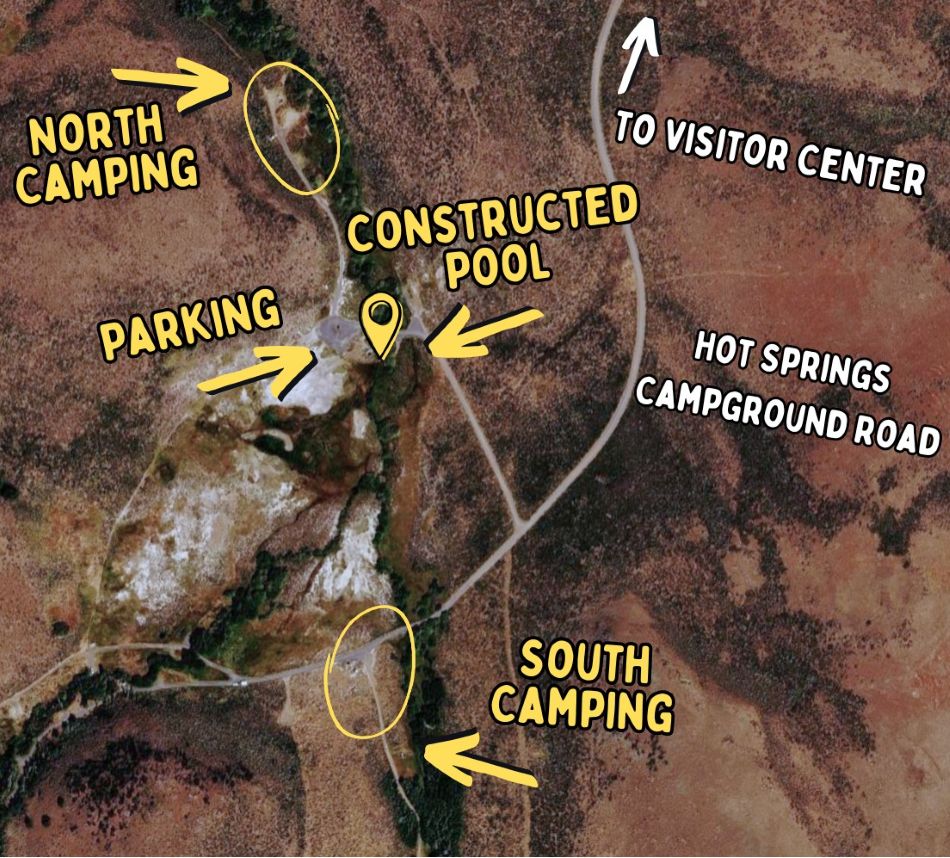
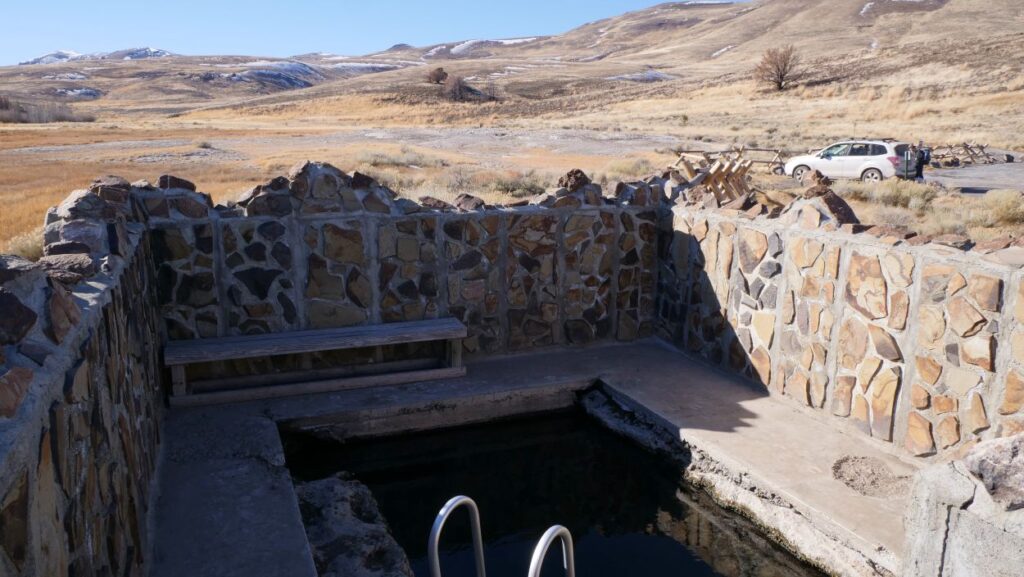
The parking lot at the hot spring pools is large, and you’ll see the iconic stone walls of the constructed pool right next to the parking lot, along with signage and a pit toilet.
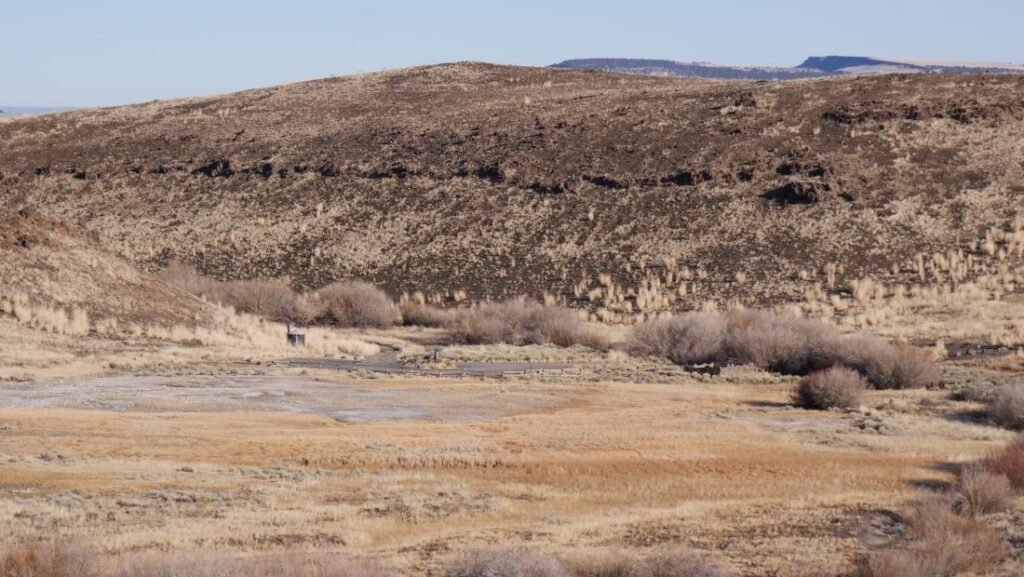
The two natural pools are about 280 feet and 460 feet west of the parking lot, and the trail as well as the land around the pools are often muddy or soggy.
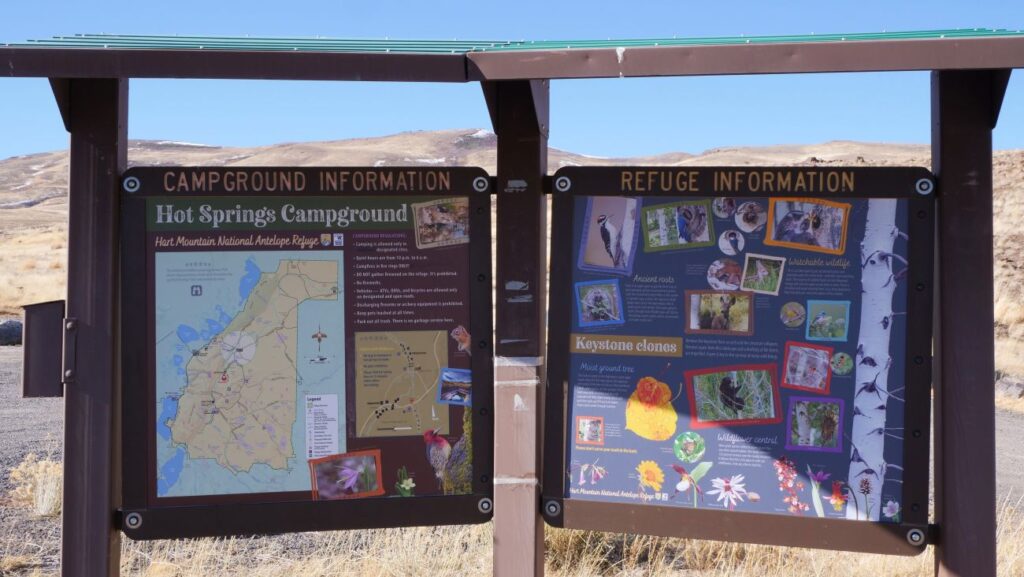
Check for Road Closures
While the refuge is technically open year-round, they are some road closures during winter weather to prevent damaging the roads when they are wet. More on when to visit later.
Soaking Pools at Hart Mountain Hot Springs
There are three individual soaking pools, two natural and one constructed.
Constructed Pool
The developed pool is certainly the most often utilized as it is generally most enjoyable to soak in.
The stone wall provides protection from strong winds common in this arid landscape, as well as shade from the intense sun, especially in winter months.
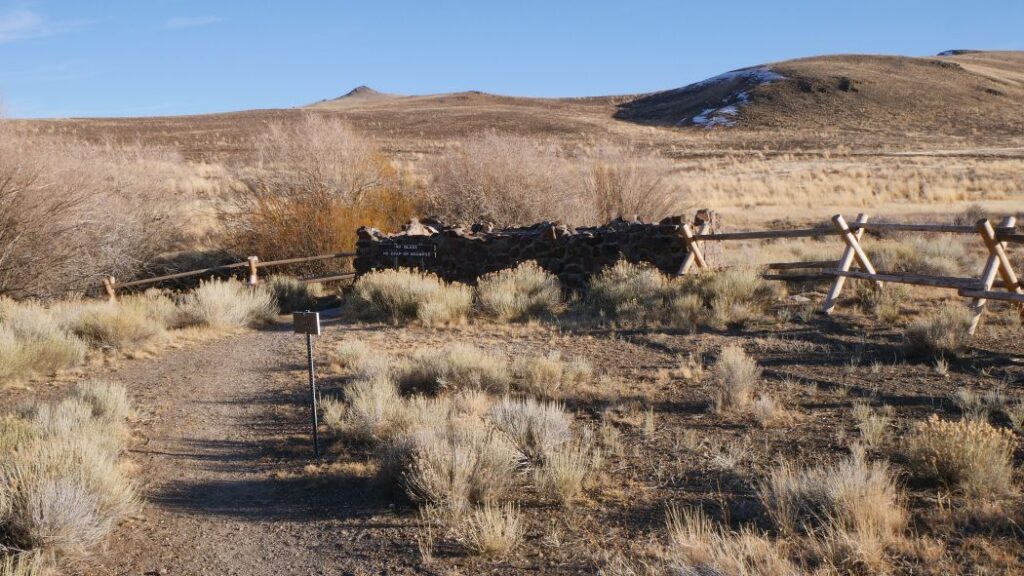
In addition, the pool is dug out quite deep, over 6 feet in places and warranting a step ladder that is helpful to get in and out.
There is a nice layer of rock about 4 to 5 feet deep that provides a place to stand in most of the pool.
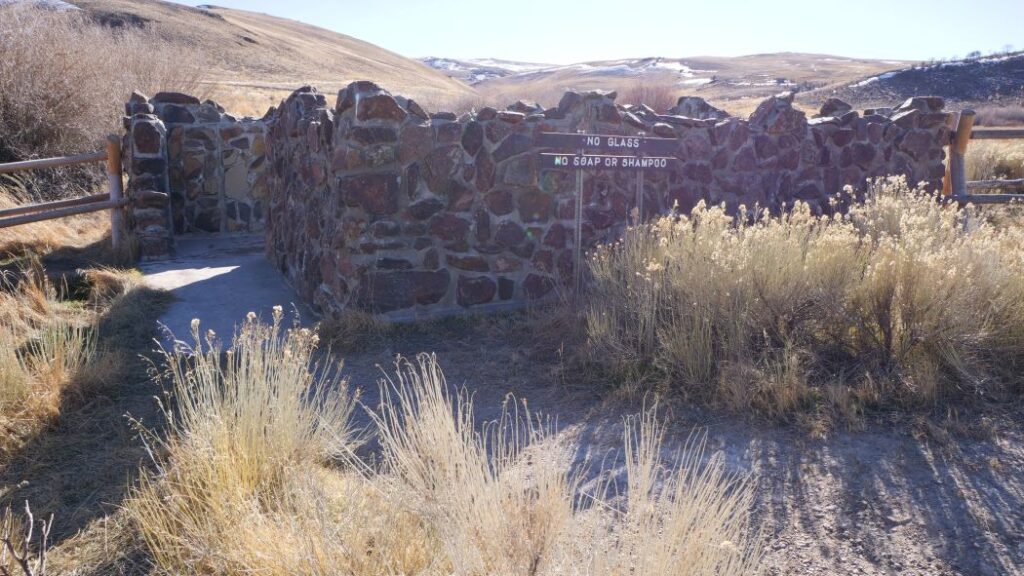
Perhaps one downside is the lack of seating, but standing is fun too and allows for more people to soak without it feeling cramped.
The water is clean, as it is constantly flushed vertically by a fresh source at the bottom of the pool and an effluent at the top.
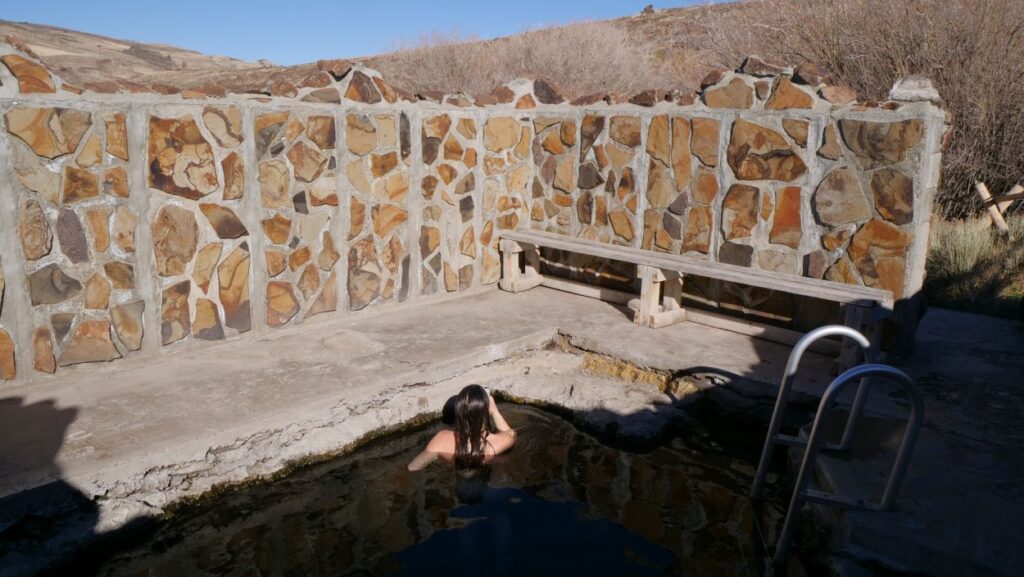
The water temperature is perfect for long soaks without overheating, though some complain the temperature is too cool. We loved the temperature when we last visited.
We also loved the convenient benches surrounding the pool which makes storing your stuff super easy.
Natural Pools
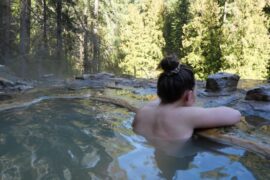
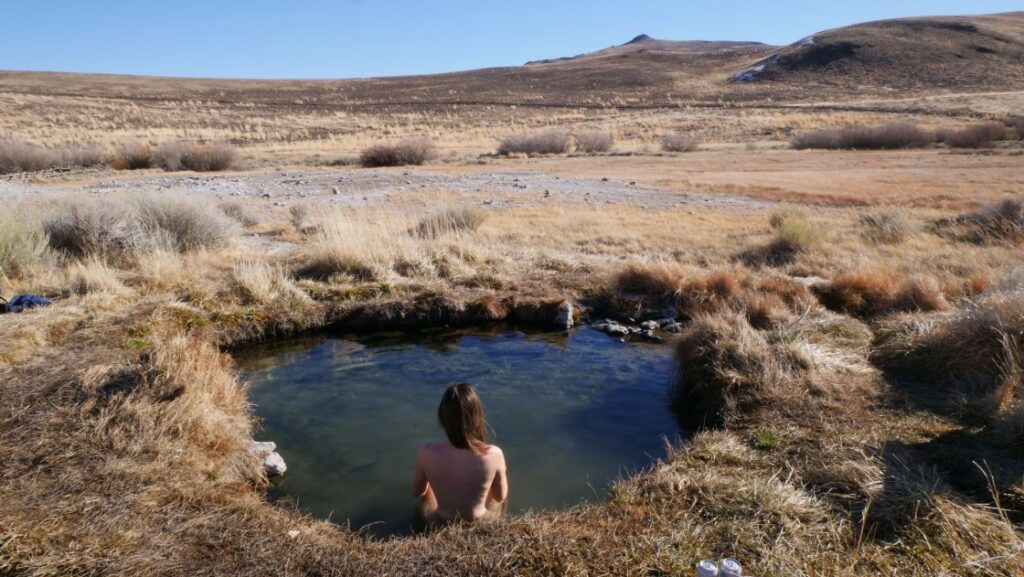
The two natural pools at Hart Mountain Hot Springs are both about the same size and similarly surrounded by grassy meadows that can get soggy and muddy.
We’ve only soaked in the closest of the two pools, and it was worth checking out, but it had its downsides.
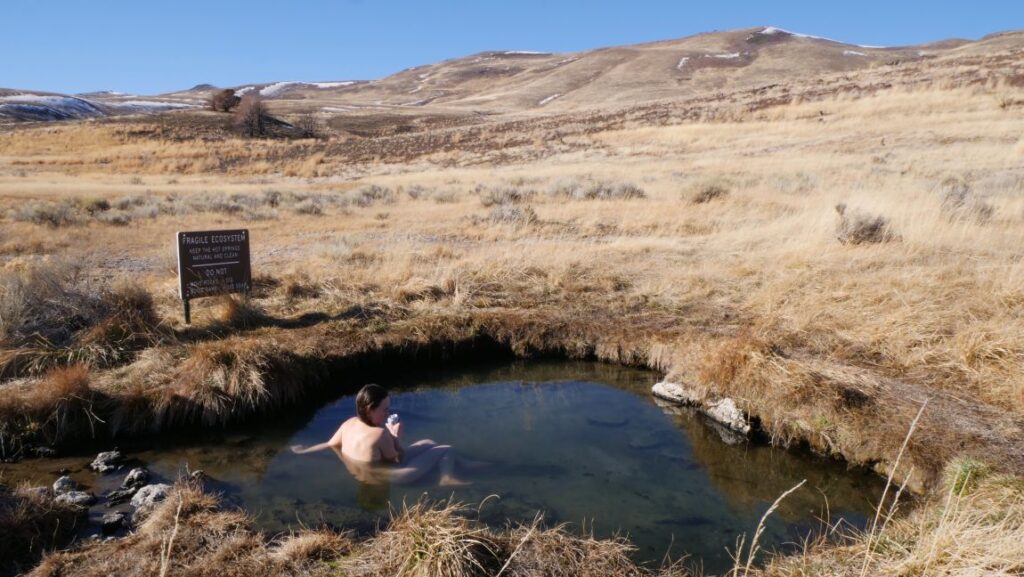
The water temperature was hot, perhaps a degree or three hotter than the constructed pool.
The pool is shallow, only a foot or two deep, and the bottom is sludge but does have some rocks to sit on.
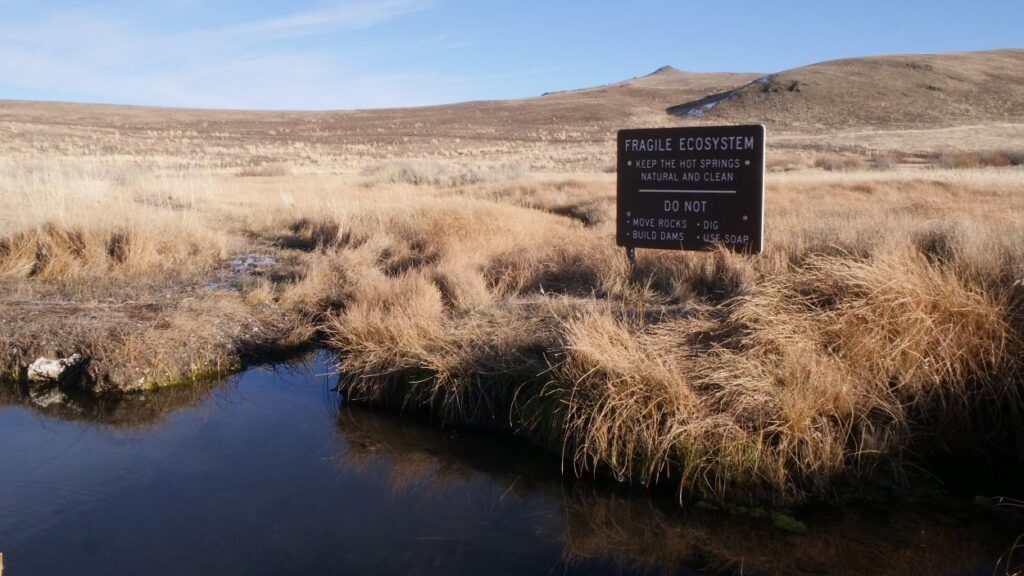
Overall, we found there was a fair amount of green algae and other floating debris that while probably harmless, wasn’t exactly pleasant, especially clearly visible in bright daylight.
We’ve soaked in a lot of natural hot springs and aren’t afraid to get dirty, but we much preferred the constructed pool to the natural pool.
When to Visit Hart Mountain Hot Springs
Hart Mountain Hot Springs is open year-round, as long as the roads within the refuge are open, which depends on weather.
Blue Sky Road and Hot Springs Road (the last two gravel roads to the hot springs) are usually open but may be closed to vehicles during winter storms.
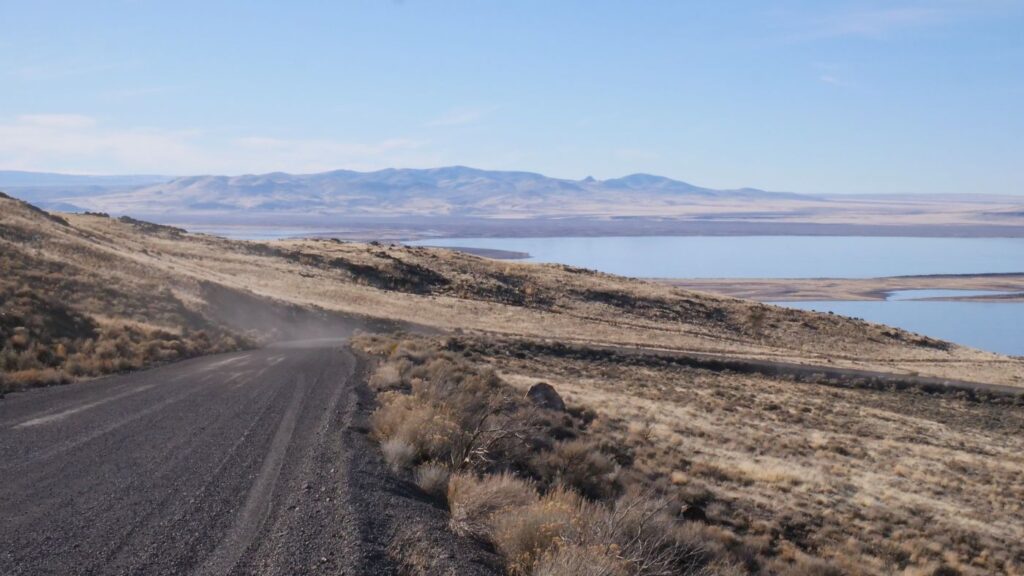
You can find more information about road closures on this refuge web page.
We recommend checking the weather ahead of time and planning to visit during dry conditions. If there is some chance of precipitation, it’s a good idea to contact the refuge before visiting.
We think soaking in hot water is best when the air is cold, so we do most of our hot spring adventures in the fall, winter, and early spring.
Beware of aggressive mosquitos brought to life by spring snowmelt and warmer temperatures between late April and mid-August, usually peaking between late June and mid-July.
For these reasons, we recommend visiting Hart Mountain Hot Springs between September and March, preferably with dry weather conditions.
Of course, weekdays will be less crowded than weekends. You will likely be sharing the campground with a few other cars on most weekends, but weekdays you can probably get the entire place to yourself (if you’re lucky).
One final tip: try to visit when the moon is small (or gone) and there are no clouds for the best stargazing. Trust us, the stars are tremendous out there, especially with no moon.
Hart Mountain Hot Springs Campground
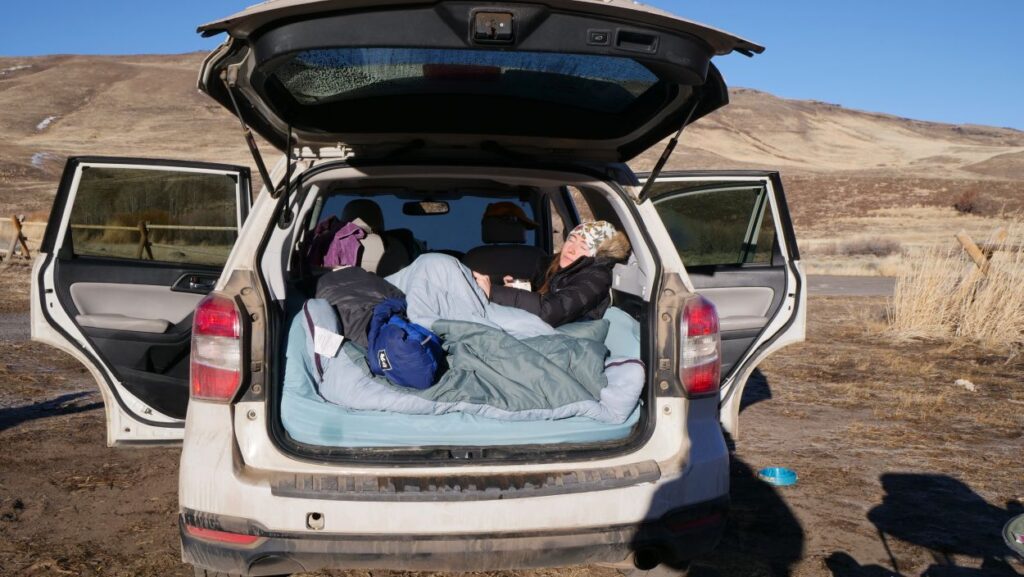
Camping at Hart Mountain Hot Springs is the way to go. With such long drive times, it makes sense to spend the night close to the hot water, so you can enjoy a nighttime or sunrise soak!
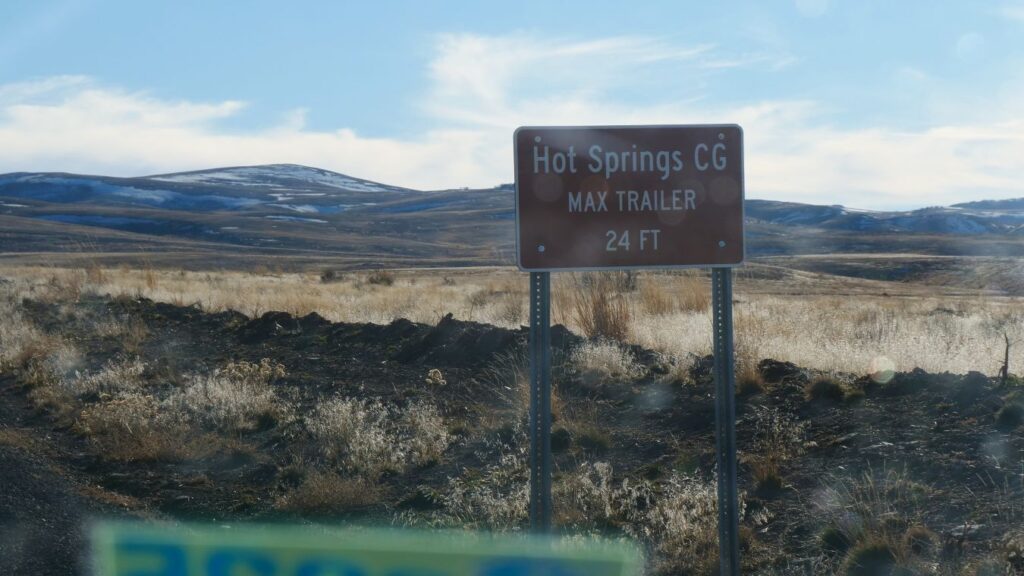
An added bonus, camping is free in any of the three campgrounds in the refuge, including the Hot Springs Campground.
Pit toilets are provided, but that is the only service offered. Water and trash disposal are not available, so plan to pack lots of water and a few trash bags.
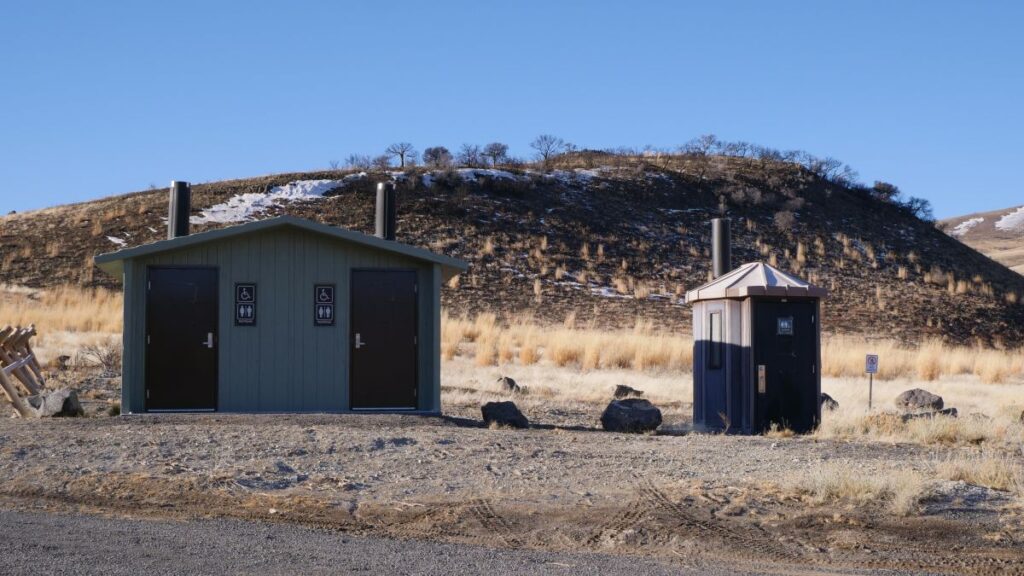
The campground is split up into two sections (north and south). Both sections are about the same, though the north section is closer to the hot springs (5 minute walk vs 10 minutes).
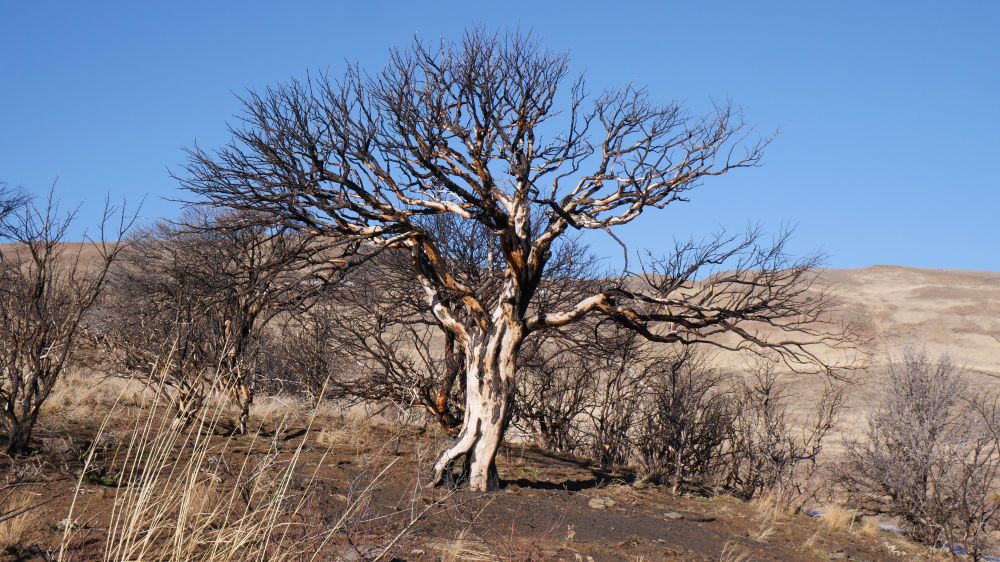
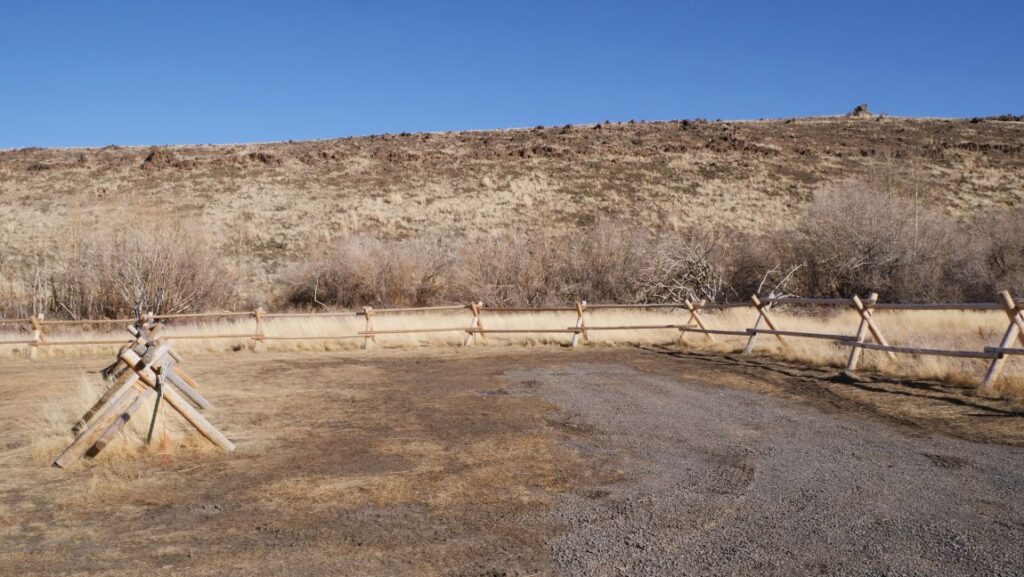
Following area closures from a fire in August of 2024, camping has become restricted to sites defined by wooden fence structures, a controversial change from previously unrestricted dispersed camping.
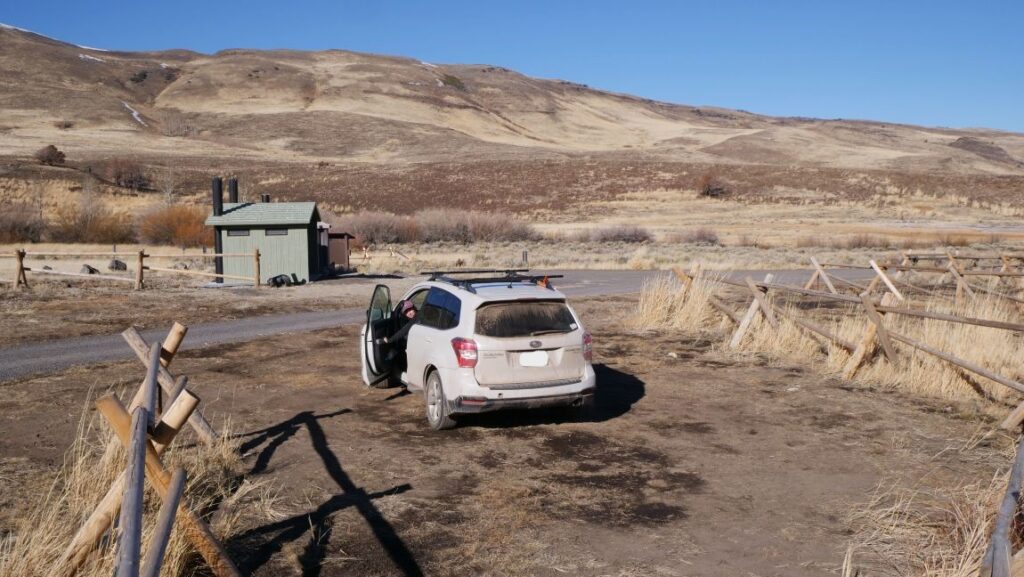
While this update means less privacy while camping, it certainly protects the fragile aspen groves and riparian zones in this area. On the bright side, it is fun to meet your neighbors!
Unfortunately, many of the sites aren’t flat, but there are enough relatively flat ones that it wasn’t an issue for us. But if you’re sleeping in a tent, be prepared for lumpy ground.
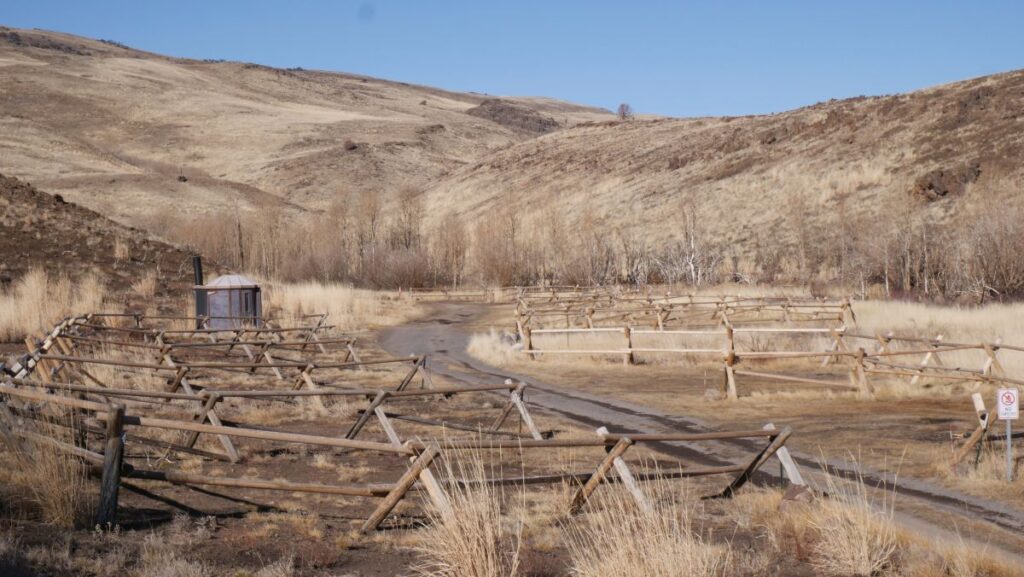
We did notice that the north side of the campground loses sun earlier than the south in the winter afternoons due to a steep hill to the west of the sites. The south section of the campground felt more open than the north.
Overall, we love camping at Hart Mountain Hot Springs campground and highly recommend you stay yourself.
Hart Mountain National Antelope Refuge Visitor Center
On the way to the hot springs, you’ll drive past the official visitor center for the refuge, located on the junction of Hart Mountain Road, Blue Sky Road, and Frenchglen Road.
There is an informative kiosk outside of the building that is accessible anytime, but the operational hours of the visitor center itself are limited.
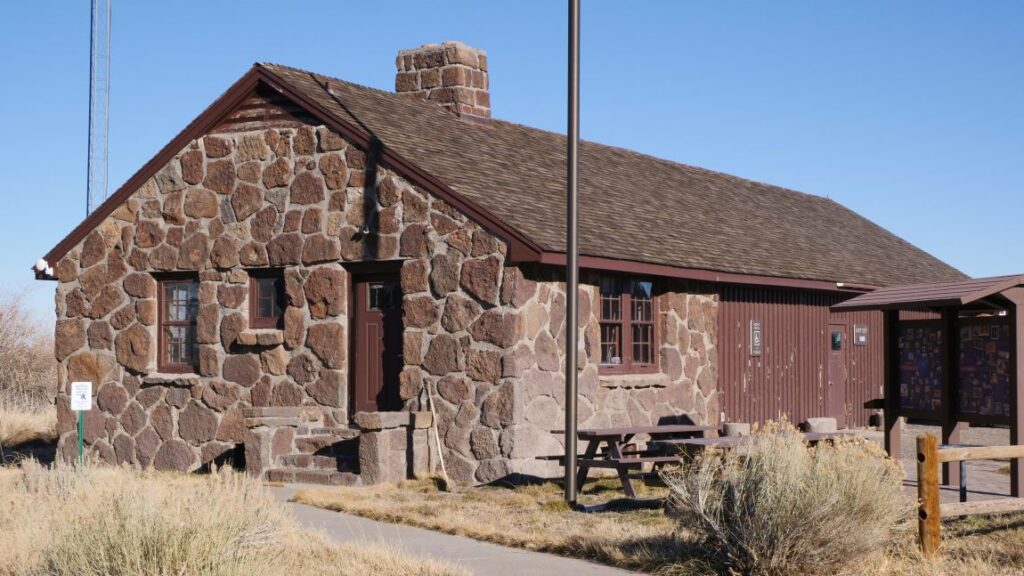
According to the official website the “Visitor Center is intermittently open between 8am-4pm when staffing is available between Memorial Day to Labor Day”.
Therefore, the building is seasonally open between the last Monday of May and the first Monday of September.
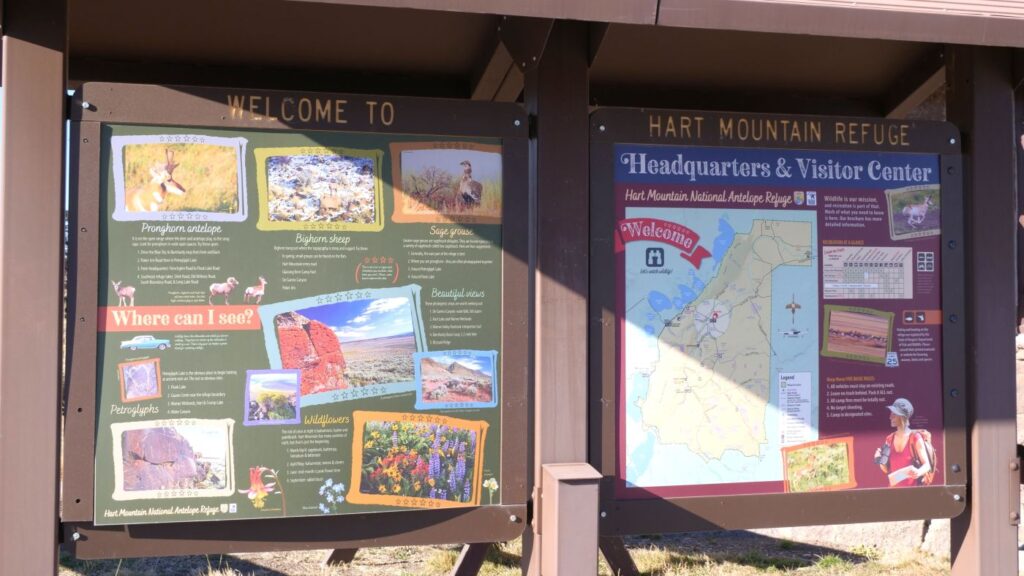
Even so, staffing may not be available between 8 am and 4 pm on any given day, so don’t get your hopes up.
We’ve only visited during winter, so no luck for us. That said, we would love to learn more about this beautiful part of Oregon from the official visitor center!
Stocking Up on Supplies
Gas and groceries can be found in Lakeview and between 8 am and 8 pm at Hart Mountain Store in Plush.
There are a handful of other small towns, including Plush, but Lakeview is your best bet for supplies, so we recommend stocking up there before making the trip into the refuge.
Don’t forget to bring plenty of water, enough food, and certainly fill up your gas tank. Make sure your vehicle is reliable and up to date on maintenance.
The remoteness is no joke. You don’t want to get in trouble if you can help it!
More Planning Resources
When planning our adventures, we typically use the following helpful websites to get a clear picture of weather, road closures and conditions, wildfires, and air quality.
For weather, check out this NOAA weather forecast for Hart Mountain Hot Springs.
For road closures and conditions, don’t miss ODOT’s Trip Check, at least for the major highways. You can always contact the refuge directly to ask about local road closures.
For wildfires and air quality, we love Watch Duty. While not as much of an issue in winter, smoky air can kill the vibe of any adventure, and wildfires can of course be dangerous.
Adventures Nearby
Being so remote, Hart Mountain Hot Springs isn’t really that close to anything nearby. However, there are some great spots within a few hours that are worth checking out.
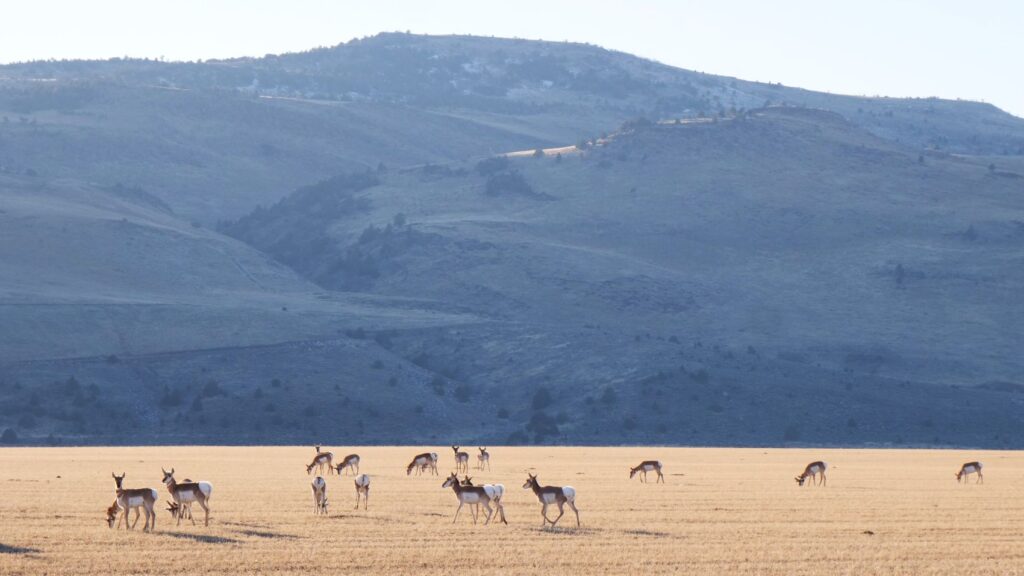
First and foremost, the antelope refuge itself beautiful and remote. Consider exploring this wilderness further. You may even see a herd of antelope.
For more amazing soaking, Summer Lake Hot Springs and Crane Hot Springs are the same neighborhood and we highly recommend both.
Warner Canyon Ski Area is just outside of Lakeview and could be a fun stop during winter if the conditions are right.
Of course, the Steens Mountain Wilderness and Alvord Desert is accessible to the east of the Hart Mountain area, offering tons of hiking, camping, and several hot springs.
In addition, you can easily pop into northern California and northern Nevada for more remote and adventurous landscapes.
More Hot Springs in Oregon
There are so many amazing hot springs in Oregon. In fact, of all the Oregon hot springs we have soaked in, Hart Mountain Hot Springs ranks among the best of the best.
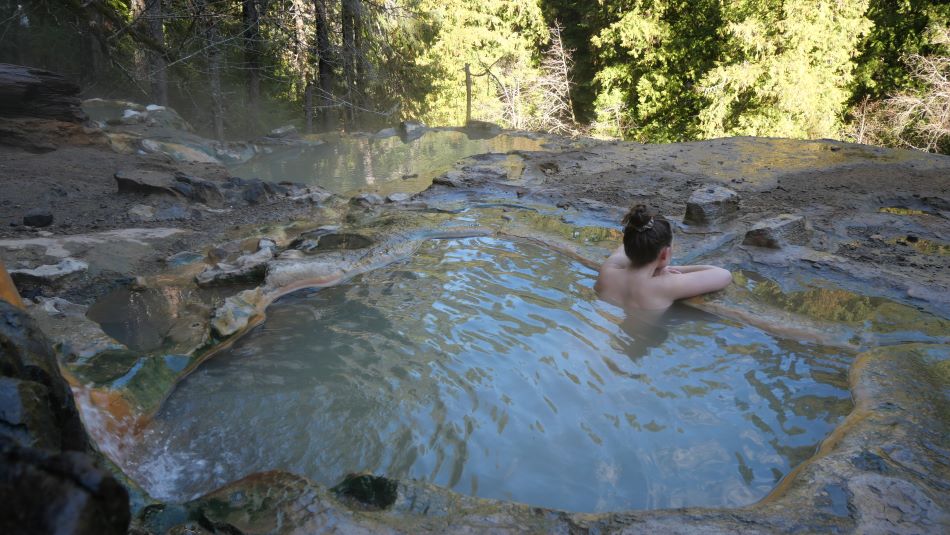
We can also recommend Umpqua Hot Springs, Summer Lake Hot Springs, Crane Hot Springs, McCredie Hot Springs, and Cougar Hot Springs, all located in Oregon.
Check out our article about the best hot springs near Bend Oregon if you’re in the area.
Conclusion
We hope you feel informed and inspired to visit Hart Mountain Hot Springs in southern Oregon.
This is truly one of our favorite hot springs in Oregon and we want others to experience it for themselves!
When you visit, do your part to leave no trace. Let’s all help conserve this beautiful area.
For more adventures in Oregon, check out all of our articles about Oregon, as well as some epic things to do in southern Oregon.